Making news accessible for everyone – together with MTM - Prenly
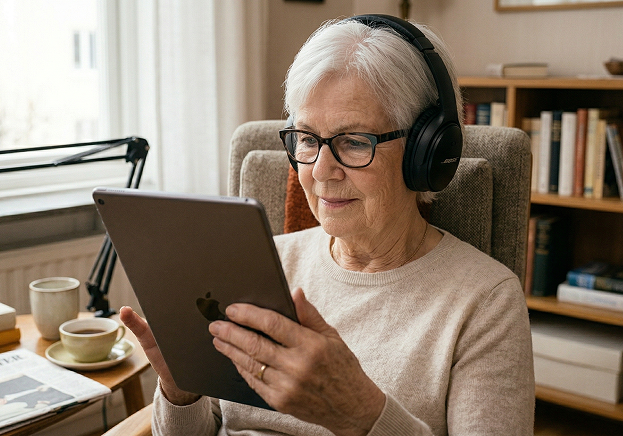
What is our talking newspaper service?
Instead of reading a printed page, the newspaper content is transformed into a structured, accessible format. The content is then delivered through dedicated apps, tailored to different user needs, where it can be listened to or used with assistive tools like screen readers or braille displays – making it possible to access the news in a way that truly works for each individual.
The talking newspaper service provides various alternatives for consuming newspapers, one of them being the Akila app powered by Prenly. The Akila app is intended for visually impaired readers as well as readers with dyslexia.
Today’s challenge
The way newspapers are produced and consumed has changed dramatically. Originally, newspapers were designed for print. Today, publishers create a much richer digital experience:
- Additional articles are published only online
- Digital-only editions and supplements are created
- Visually driven content such as images, layouts, or design-heavy articles are added
While this shift has created more value for most readers, it has also introduced a gap. Visually impaired users cannot always access this expanded content in the same way, which can lead to an uneven experience compared to other readers.
Another challenge is how content is consumed. A full newspaper can take several hours to listen through – often up to six hours. While sighted readers can quickly scan headlines and choose what interests them, this level of flexibility is harder to achieve in audio-based experiences.
Our plan forward
Our goal is simple: to give people with different abilities the same opportunity to access and explore news as everyone else.
To better understand which changes will truly help users, MTM and Prenly recently completed a pre-study exploring how people interact with accessible content. This gave us valuable insights into what works well today versus where improvements are needed. One encouraging takeaway was that we don’t need to start from scratch. Much of the technology needed to improve the experience exists today.
Based on these findings, the next step is to test improvements with users and gradually make the experience easier to use. A key focus is personalization based on user interests, combined with improving how content is structured and presented. This makes it easier to find relevant content without removing depth or choice. We also want to explore introducing voice navigation in the Akila app, making it even easier for users to move through content in a way that suits their needs.
What this means for our users
Making the service more personal and easier to use means people can find the news they care about faster and be engaged from the first minute. It becomes simpler to explore and use the service more often, and stay interested over time. This creates a better overall experience that encourages users to keep, extend, or start a subscription.